Recurring janitorial contracts

Janitorial Services Duluth

A contracted crew that arrives on your schedule, works from a written scope, and gets checked against it, so the condition of your building does not drift from one week to the next.

✓Nightly or weekly crews ✓Written scope document ✓Same assigned cleaners
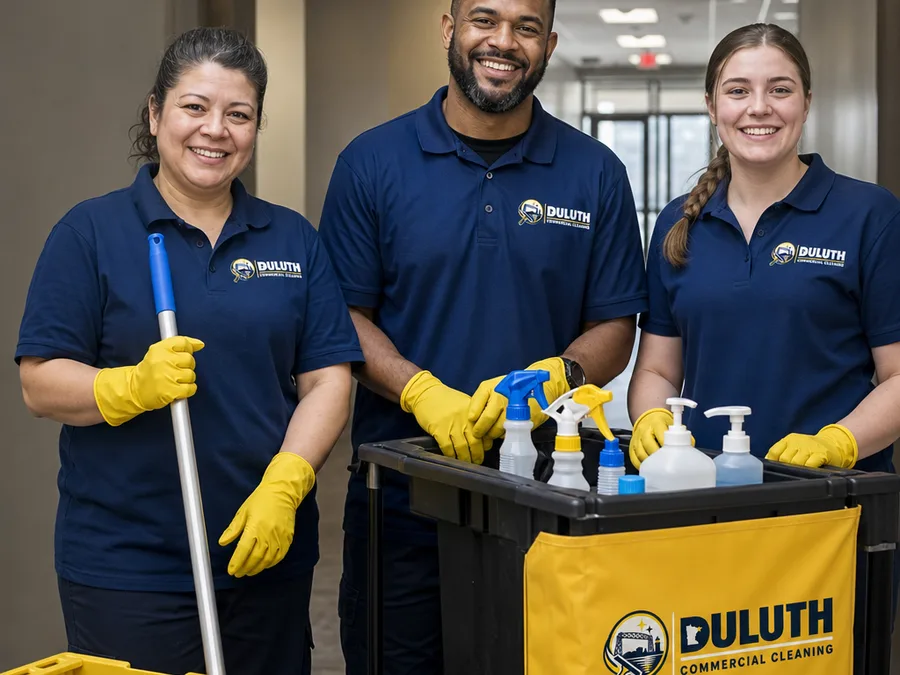
Commercial cleaning team with organized janitorial supplies in a facility corridor
Service built on routine

Janitorial services Duluth facilities can actually count on

Most cleaning complaints are not about one bad night. They start when the crew changes, a task quietly drops off the list, and nobody notices until a tenant emails about the restroom. Janitorial services in Duluth work when the scope is written down, the same people do the work, and someone checks the result against that document on a set interval.

A recurring contract sets the cadence first: five nights a week for a busy clinic, two evenings for a small office suite, Saturday mornings for a retail floor. From there the scope document lists every task by area and frequency, names who holds keys and alarm codes, and states which consumables we track and refill. Nothing on that list is treated as optional.

Scheduling, key handling and follow-up all run out of our office at 26 E Superior St, Unit 4, so a change request reaches someone in Duluth rather than a call center. Cadence is yours to set: nightly, several evenings a week, weekly, or a lighter weekend visit with periodic detail work added at a stated interval.

Check Availability
Inside the nightly scope

What a recurring janitorial scope covers on each visit

Nightly and weekly cleaning routines

Trash and recycling pulls, desk and surface wiping, entry glass spot checks, vacuuming of traffic lanes and mopping of hard floors run at the frequency written into your scope. Every task is tied to a named area, so nobody has to guess whether the back corridor was included.

Restroom and breakroom service

Restrooms get fixtures, partitions, mirrors, dispensers and floors on every scheduled visit, with dispenser levels logged rather than eyeballed. Breakrooms cover counters, sinks, tables, appliance exteriors and trash, since that one room generates more complaints than any other space in an office.

Consumable and supply management

Soap, paper towels, toilet tissue, liners and hand sanitizer can sit inside the contract so you stop placing orders. Usage is tracked per dispenser, the ones that run dry early get flagged, and stock levels are adjusted once there are a few months of real numbers for your building.

Keys, alarms and after-hours access

Access is handled in writing: who holds which key or fob, which alarm code the crew uses, what time they arrive, and who gets called if a door is found unlocked. Changes to that list are recorded the same day instead of being passed along verbally between shifts.

Inspections and scope revisions

A supervisor walks the building on a set interval and scores the work against your scope line by line, not against a general impression. Findings come back to you, and when the building changes, the document is revised with it rather than drifting quietly out of date.

Check Availability
Who signs a contract

Facilities in Duluth that run better with a contracted crew

Recurring service earns its keep in buildings where the same conditions come back every week and the cost of a missed night shows up fast, either in tenant complaints or in a room nobody wants to use.

  • Multi-tenant offices: Shared corridors, elevator lobbies and restrooms used by four different companies need one accountable crew and one scope, or every tenant assumes another one is paying attention. Written frequencies by area settle those arguments before they start.
  • Downtown storefronts: Retail space on Superior Street collects tracked-in salt, slush and grit from November into April, which means entry mats, thresholds and the first twenty feet inside the door need attention far more often than the stockroom does.
  • Clinic and medical suites: Waiting rooms, reception counters, exam room touchpoints and designated restrooms need the same sequence every night, with color-coded cloths kept separate by area. Clinical waste and regulated treatment work stay outside the cleaning scope.
  • Gyms and studios: Equipment handles, mats, benches, mirrors and locker rooms are touched by hundreds of hands a day, so a gym usually needs nightly work on the contact surfaces and a heavier reset of the wet areas once a week.

When you compare bids, read what each one commits to in writing. A lower monthly figure attached to a vague task list usually means fewer visits to the areas that matter, and you will find out which areas in about six weeks. Ask for frequencies by area and the inspection interval before you sign anything.

Check Availability
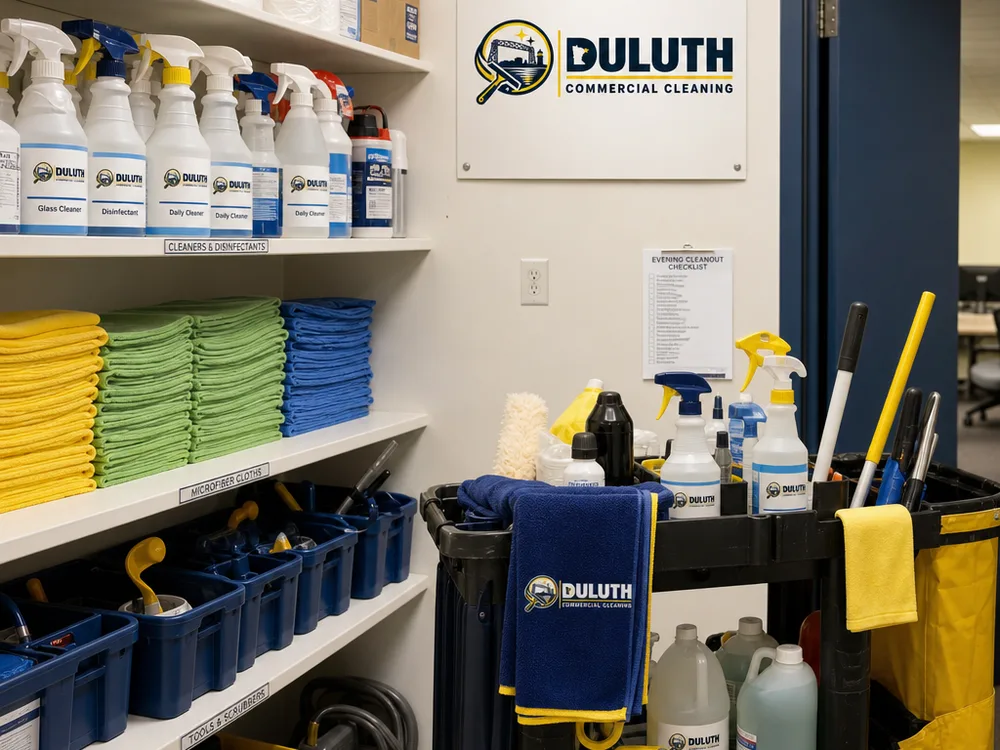
Organized janitorial closet with labeled bottles, color-coded microfiber cloths, and a staged cleaning cart
From walkthrough to contract

How janitorial service starts and stays steady

Check Availability
01

Walkthrough and task list

A walkthrough of the whole building comes first: square footage by area, floor surfaces, restroom and fixture counts, trash volume, and the spots your current crew keeps missing. Anything you want handled on a longer interval, such as high dusting, is noted separately for pricing.

02

Written scope and cadence

The scope document comes back to you with every task tied to an area and a frequency, plus the visit window, the consumables included and the price. You edit it before anything is signed, and that edited version is what the crew works from on the first night.

03

Crew assignment and access setup

The same cleaners are assigned to your building and trained on its layout, its access route and its problem areas. Keys, codes and contact numbers are recorded, and a backup crew is briefed on the identical document so a sick night does not turn into a skipped night.

04

Inspections and steady adjustment

Supervisor inspections start in the first month, when small mismatches between the document and the building are still easy to correct. After that they run on a set interval, and scope changes are written down and priced rather than absorbed quietly and forgotten.

Budgeting a janitorial contract

How Much Do Janitorial Services Cost in Duluth, MN?

Recurring janitorial service in Duluth typically ranges from $0.10 to $0.30 per square foot per month, which puts most small to mid-size facilities between $400 and $2,400 a month. The spread comes down to how many nights a week the crew comes in, how many restrooms they service, and how much of the floor is hard surface rather than carpet.

Square footage is only the starting point. Trash volume, fixture counts, whether supplies sit inside the contract, after-hours access requirements and any periodic detail work added at an interval all move the figure. A written scope goes in front of you before any number is quoted, because a price with no task list attached cannot be compared to the bid next to it.

Check Availability
Janitorial contract questions

Questions Duluth facility managers ask before signing a janitorial contract

How long is a janitorial contract in Duluth usually written for?

Most recurring agreements run month to month or for twelve months, and either way the scope document matters more than the term does. Ask what notice period applies, whether the price is fixed for the term, and how a scope change gets handled partway through the year.

Will the same cleaners come to our building every week?

Yes, a crew is assigned to your building and stays with it, because the second month is always better than the first once they know the layout. Coverage for vacations and sick nights comes from people trained on your same scope document, not from a random fill-in.

Can you clean after our office closes for the day?

After-hours work is the default on most janitorial accounts here. We agree on an arrival window, an access method and an alarm procedure in writing, and if your building has a hard cutoff, such as a shared lobby that locks at ten, the schedule is built around it.

What happens if a task on the scope gets missed?

Tell us which night and which area, and the crew corrects it on the next visit, or sooner when it is a restroom. Repeated misses in one area usually mean the frequency is wrong for how that space is used, so the document gets revised instead of the complaint repeating.

Do you provide the paper products and soap?

Supplies can sit inside the contract or stay on your own purchasing, whichever you prefer. When we handle them, usage is tracked per dispenser so restocking matches what the building actually goes through, and you get one consistent product rather than whatever happened to be in stock that week.

How is janitorial service different from a deep clean?

Janitorial service is the recurring routine that holds a building at a steady condition. A deep clean is a periodic reset for buildup the routine cannot reach, such as mineral scale and dust above eye level, and it is usually scheduled once or twice a year alongside the contract.

Set up recurring service

Get a written janitorial scope and a cadence for your building

Tell us your square footage, what type of facility you run, how many nights a week you want a crew on site, and anything your current cleaning keeps missing. We will walk the building, put the task list and the price in writing, and set a start date that fits your access hours.

Request a quote

Tell us about your facility

Send the details and we will arrange a walkthrough, then put a written scope in front of you before any work is scheduled.