Cleaning a hybrid workplace

Office Cleaning Duluth

Service sized to how full your floor actually gets, so you are not paying five nights a week for desks that see people on Tuesday, Wednesday and Thursday.

✓Priced to real occupancy ✓Written desk policy ✓Meeting rooms and breakrooms
Commercial cleaner maintaining a professional office common area in Duluth
Half a floor, most days

Office cleaning Duluth employers can match to actual occupancy

Hybrid schedules broke the old math. A fifteen thousand square foot floor built for ninety people might hold thirty on a Monday and eighty on a Wednesday, and the cleaning contract written in 2019 charges the same either way. Meanwhile the rooms that genuinely take a beating, meeting rooms and the kitchen, get the same attention as a row of empty desks.

The fix is to weight the scope by use rather than by area. Restrooms, the kitchen and breakroom, meeting rooms and circulation get the frequency they earn, individual workstations get a lighter and clearly defined touch, and a written desk policy states exactly what a cleaner may handle on an occupied desk and what stays untouched.

Because scheduling runs out of our office at 26 E Superior St, Unit 4, changing a cadence is a short conversation rather than a contract amendment cycle. Offices here commonly run two or three evenings a week with restrooms on every visit, and a handful book a Friday-only pass with a monthly detail added on top of it.


Check Availability
Where the wear happens

What an office scope covers when the floor is half full

Meeting rooms after the spike

Conference and huddle rooms absorb the traffic hybrid schedules concentrate: table surfaces, chair arms, whiteboard trays, remote controls, cable pucks and the crumbs under the table after a working lunch. On a heavy midweek day these rooms need resetting more urgently than anything else on the floor.

Kitchen, breakroom and coffee stations

Counters, sinks, tables, chair bases, appliance exteriors, the coffee station and the floor around it are handled every visit, since this is where a shared office actually gets dirty. Fridge and microwave interiors can be scheduled periodically when someone on your side clears them first.

Restrooms on every visit

Restroom frequency does not follow desk occupancy, because thirty people use the same fixtures as ninety and notice the same failures. Fixtures, partitions, mirrors, dispensers and floors are done on each visit, with dispenser levels logged so Monday morning is never the discovery.

Workstations under a written policy

Desks are cleaned to a policy you approve: typically hard surfaces cleared by the user, trash and recycling pulled, and monitors, keyboards, papers and personal items left alone entirely. Staff can opt a desk out with a marker you choose, and that request is honored without anyone having to ask twice.

Circulation, reception and shared edges

Entry mats, reception counters, corridor floors, elevator lobbies, stair rails and the printer alcove carry traffic regardless of how many desks are occupied that day. These run on a fixed frequency because they are what a visitor sees, whatever your headcount happens to be.

Check Availability
Offices that rethink cadence

Duluth workplaces where occupancy and cleaning cost drifted apart

Most offices we walk into are paying a frequency set before their schedule changed. Four situations come up over and over, and in each one the cost is in the wrong place rather than simply too high.

  • Three-day-a-week floors: When almost everyone comes in midweek, Monday and Friday cleaning buys very little while Wednesday night is underserved. Shifting visits onto the days that are actually busy usually costs the same and produces a visibly better Thursday morning.
  • Downsized suites: A company that gave back half its floor often keeps paying for the original square footage. Repricing against the space you occupy now, with the mothballed area dropped to a periodic check, is a straightforward saving nobody thinks to ask for.
  • Multi-tenant floors: In a managed building the landlord covers corridors, lobbies and shared restrooms while your suite is yours. Knowing exactly where that line falls stops you paying twice for the same corridor or assuming someone else handles your kitchen.
  • Client-facing suites: Professional offices bringing clients in need reception, the meeting room and the guest restroom held to a higher standard than the back office. Weighting the scope that way is cheaper than raising the frequency everywhere on the floor.

Before renewing any office contract, count what actually gets used. Badge data or a two-week tally by day is usually enough to show whether your visits land on the busy nights. Then ask the bidder to price the meeting rooms and kitchen separately from the workstation area, because those two lines move independently.

Check Availability
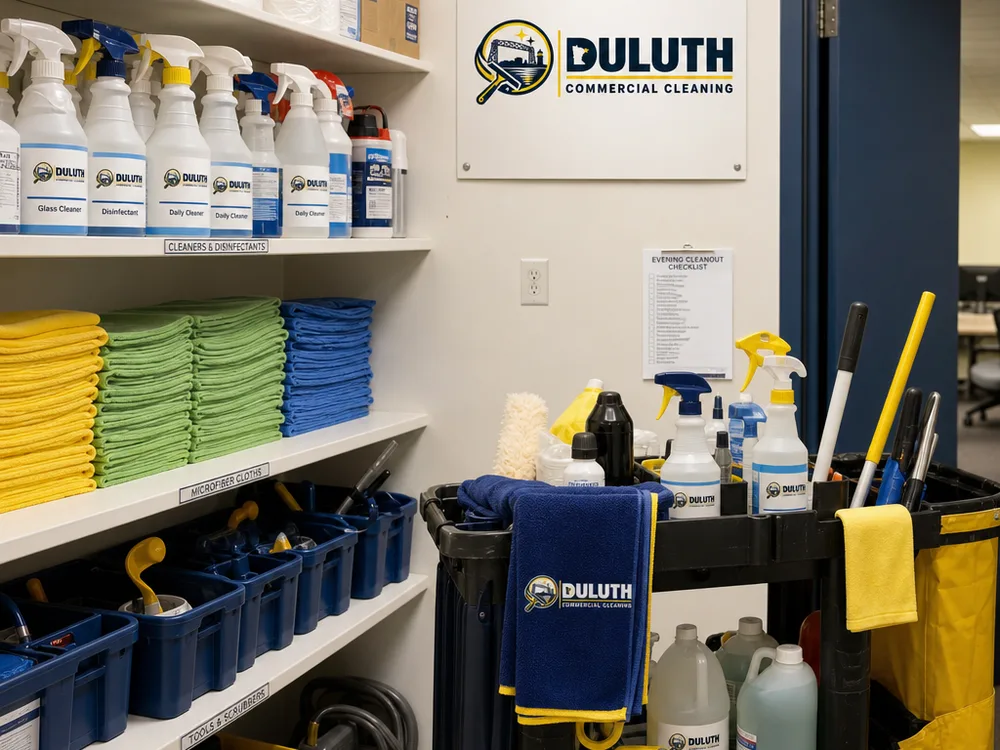
Organized janitorial closet with labeled bottles, color-coded microfiber cloths, and a staged cleaning cart
Setting the right cadence

How office cleaning gets scoped and adjusted

Check Availability
01

Occupancy before square footage

The first question is not how big the floor is but which days it fills and which rooms take the load. Rough headcount by weekday, meeting room booking patterns and where people actually eat give a far better basis for a schedule than a floor plan does on its own.

02

Desk policy agreed in writing

You decide what a cleaner may touch on an occupied desk, and it is recorded before the first visit rather than left to judgment. Most offices settle on trash and recycling plus any cleared hard surface, with papers, keyboards, monitors and personal items excluded, and an opt-out marker for anyone who wants one.

03

Weighted schedule and pricing

Each area is given its own frequency: restrooms and the kitchen on every visit, meeting rooms after peak days, workstations lighter, periodic detail at a stated interval. You see what each block costs, so trimming the schedule is a choice you make with numbers rather than a discount someone offers.

04

Review once the pattern settles

Office attendance keeps moving, so the schedule gets a proper look after the first couple of months and then periodically. If Wednesdays have grown and Fridays have emptied out, the visits move with them instead of quietly staying where they were written a year ago.

Budgeting office service

How Much Does Office Cleaning Cost in Duluth, MN?

Office cleaning in Duluth typically ranges from $0.10 to $0.28 per square foot per month, putting many suites between $250 and $1,800 a month at two or three visits a week. Booked per visit, smaller offices commonly land between $120 and $400, with the restroom count mattering more than the desk count does.

Frequency is the main lever, and it is the one worth adjusting rather than accepting. Restroom and kitchen counts, floor surfaces, trash volume, whether supplies sit inside the agreement, after-hours access and any periodic detail work all move the figure. Scope and price are written area by area so you can see which block to trim before you sign.

Check Availability
Workplace manager questions

What Duluth office managers ask when rescoping a cleaning contract

Will your cleaners touch anything on my team's desks?

Only what your written policy allows. The common setup is trash and recycling pulled and cleared hard surfaces wiped, with papers, keyboards, monitors and anything personal left strictly alone. Staff who want a desk skipped entirely can flag it with a marker you choose, and crews are briefed to respect that.

Can we cut to two nights a week without it showing?

Usually yes, provided the two nights sit on your busiest days and restrooms stay on every visit. What fails is cutting frequency evenly across the week: that leaves the kitchen and meeting rooms short on exactly the days they are hammered, which is what people actually notice and complain about.

How do you price an office that is half empty most days?

By weighting the scope rather than the square footage. Restrooms, kitchen and meeting rooms are priced on use because their workload barely changes, while the workstation area is priced lighter and at lower frequency. That splits the bill closer to where the work genuinely is.

Who cleans the corridors and shared restrooms in our building?

In a managed multi-tenant building those are normally the landlord's responsibility through common area charges, and your suite is yours. Check your lease before scoping, because the line falls in different places from building to building and paying twice for one corridor is a common and avoidable mistake.

Do you clean during the day or only after hours?

Both are workable in an office. After hours is the default and keeps disruption at zero, while daytime service suits smaller suites and buildings where evening access is awkward. A few offices split it: a daytime restroom and kitchen check plus an evening pass on the rest of the floor.

Can you add a deeper clean a few times a year?

Yes, and most hybrid offices should, because a lighter weekly routine leaves more for the periodic reset to handle. High dusting, vents, baseboards, detail work and appliance interiors are quoted separately from the recurring schedule so you can place them where the calendar suits you.

Rescope your office

Price your office cleaning against the days people actually come in

Send us your square footage, a rough headcount by weekday, your restroom count and how your meeting rooms get used. We will walk the floor after hours, propose a weighted schedule with each block priced on its own, and put the desk policy in writing before anyone starts.

Request a quote

Tell us about your facility

Send the details and we will arrange a walkthrough, then put a written scope in front of you before any work is scheduled.