Sales floor under bright light

Retail Cleaning Duluth

Retail lighting is unforgiving, so the scope follows the traffic: entrances, fitting rooms and restrooms get the frequency, and the quiet back corner gets what it actually needs.

✓Weighted by foot traffic ✓Entry salt and slush ✓Lease split in writing
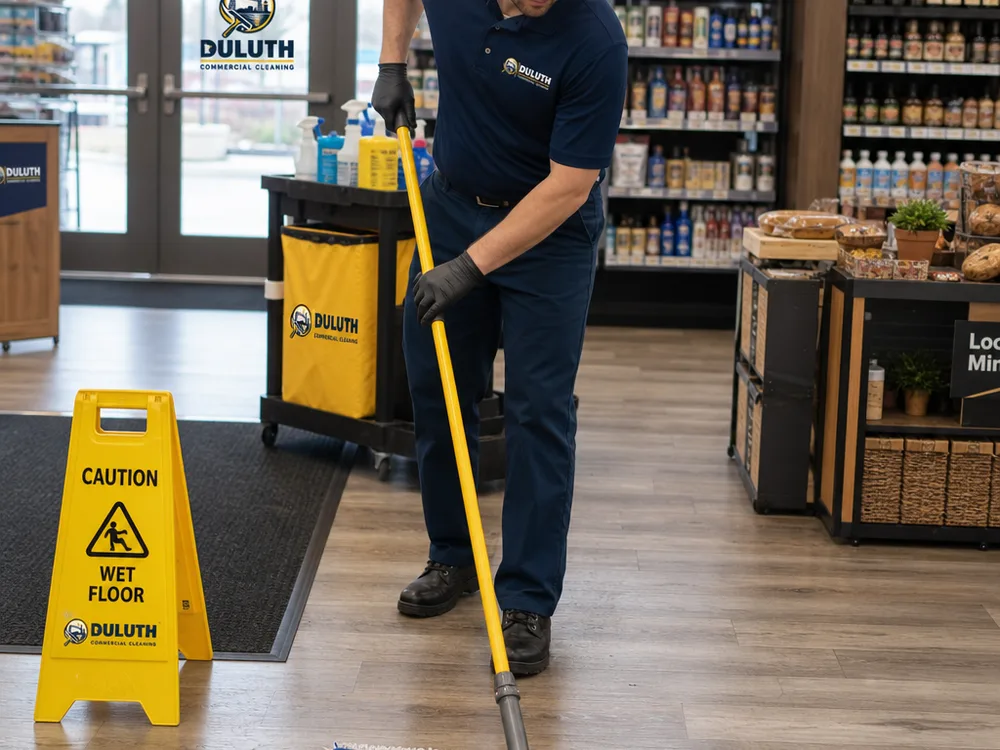
Cleaner performing commercial floor care with a microfiber flat mop in a retail aisle
What the lighting reveals

Retail cleaning Duluth stores can weight toward the traffic

Retail lighting is designed to make merchandise look good, and it does the same favor for dust on a shelf lip, a smear on a fixture and a gray stripe worn down the main aisle. A shopper reads all of that in about four seconds, well before they read a price tag, and it lands on the store rather than on the cleaning schedule.

Cleaning a store evenly wastes money and still looks wrong. Entrances, main aisles, fitting rooms, checkout and restrooms absorb nearly all the traffic and nearly all the judgment, so they carry the frequency. Stockrooms, back corners and low-traffic departments run lighter and get caught properly during periodic detail work instead.

Local dispatch from 26 E Superior St, Unit 4 matters most in retail during a Duluth winter, when a thaw and refreeze cycle turns an entrance into the dirtiest square footage in the building overnight. Cadence usually tightens from November through April and eases back once the salt stops coming through the door.

Check Availability
Where shoppers look

What a retail scope covers across a store or center

Entrances, mats and vestibules

The vestibule takes the worst of a Duluth winter: salt crust, meltwater, grit and sand ground into the mat and the floor beneath it. Mats are lifted and the floor underneath cleaned rather than mopped around, and in heavy weather this zone often needs attention more than once a day.

Fitting rooms and mirrors

Fitting rooms combine a small enclosed space with constant hand contact: hooks, benches, door latches, mirror edges and the floor in every stall. Shoppers inspect these rooms closely because they are standing still in them, and a dusty bench corner registers immediately under that lighting.

Main aisles and checkout

Traffic lanes and the checkout area wear visibly ahead of the rest of the floor, so they are cleaned on a tighter interval than the perimeter. Counter surfaces, payment terminals, bagging areas and the floor where a line forms are worked every visit rather than rotated through.

Customer and staff restrooms

A customer restroom shapes a shopper's view of the whole store, fairly or not. Fixtures, partitions, floors, mirrors and dispensers are handled every visit with levels logged, and staff restrooms and break areas run on the same routine because turnover complaints usually start there.

Fixtures, shelf edges and low dusting

Shelf lips, display bases, endcap tops, rail undersides and the floor beneath fixtures collect dust that stands out under display lighting. These are worked on a stated rotation, so every part of the sales floor is reached even though not all of it is touched on the same night.

Check Availability
Retail spaces we cover

Duluth retail settings with very different cleaning demands

Retail is not one category. The size of the space matters far less than who owns which floor and how hard the door works, and those two things reshape a scope entirely.

  • Downtown storefronts: A Superior Street shop has one door doing all the work and no buffer between the sidewalk and the sales floor. Winter turns that entrance into the whole job, and the first stretch of floor inside needs far more frequency than anything at the back of the store.
  • Multi-tenant centers: In a center the common area, shared restrooms and corridors sit with management while each store handles its own space. The split is set by your lease and by common area charges, and confirming it before scoping stops one entrance being cleaned twice or not at all.
  • Big-box and grocery floors: Large formats carry long aisles, carts, produce or garden debris and restrooms at genuine volume. The work is less about detail and more about covering a lot of floor consistently, with a rotation that reaches the perimeter departments on a dependable interval.
  • Seasonal peak periods: Holiday, back to school and tourist weekends can triple the foot traffic through a door for weeks at a time. Most stores add visits during those runs rather than rewriting the scope, then drop back once the season ends and the traffic normalizes.

Before you sign anything for a leased retail space, read the common area clause and find out precisely where management's cleaning stops. Then ask the bidder to price entrance and fitting room frequency as its own line. Those two zones decide how the store looks, and they are the ones worth protecting when a budget gets cut.

Check Availability
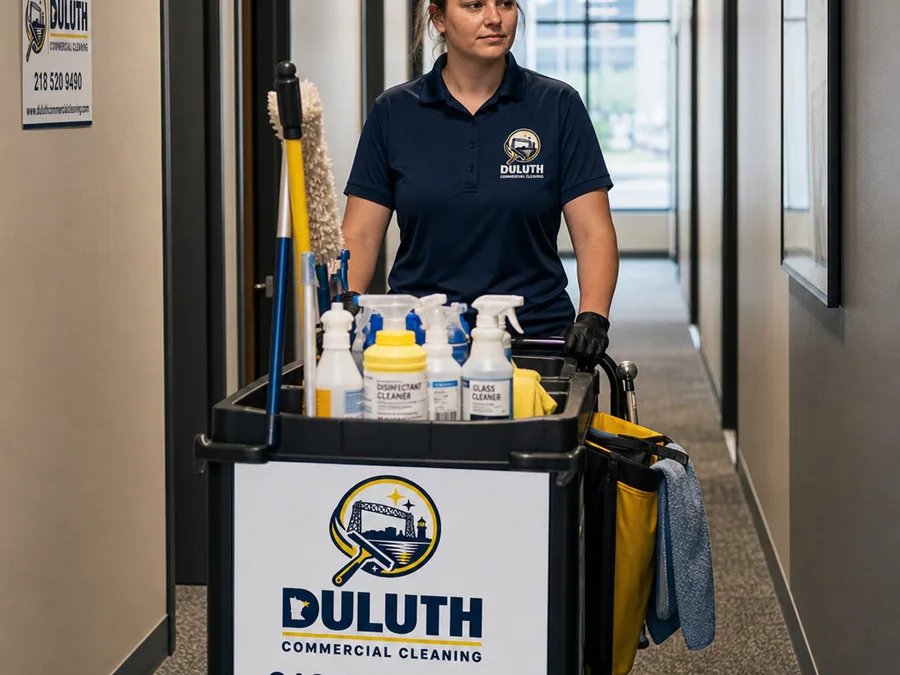
Uniformed janitorial technician moving organized cleaning tools through a commercial hallway
Mapping traffic first

How a retail cleaning scope is built

Check Availability
01

Walk the floor at trading hours

The walk happens while the store is open, because an empty sales floor hides the pattern entirely. Where people queue, which aisle they take from the door, which fitting rooms get used and where the wear stripe already runs all tell us where the frequency has to go.

02

Confirm the lease boundary

For leased space we check with you which areas fall under common area maintenance and which are yours, including the entrance, any shared corridor and the restrooms your customers use. That boundary is written into the scope so a disputed corridor never turns into a disputed invoice.

03

Weight the frequency by zone

The store is divided into zones with their own intervals: entrance and fitting rooms highest, aisles and checkout next, perimeter and stockroom on rotation. You see the cost of each zone separately, which makes a seasonal increase or a quiet-month reduction a simple adjustment.

04

Flex with the season

Winter entrances and holiday traffic both need more than the baseline, and both are predictable enough to plan. Added visits are agreed in advance for those runs and come off again afterward, so a December scope is not still being billed against a slow February.

Costing store service

How Much Does Retail Cleaning Cost in Duluth, MN?

Retail cleaning in Duluth typically ranges from $0.10 to $0.30 per square foot per month for in-store service, with smaller shops often booking per visit between $150 and $600 instead. Common area programs for a multi-tenant center more commonly run $800 to $4,000 a month depending on the corridor footage and restroom count.

Traffic volume, hours of operation, restroom and fitting room counts, floor surface and the season all move the figure, and winter entrance work is the single most underestimated line in a retail budget here. Whether periodic detail is folded in matters too. A written scope with zones and frequencies priced separately comes before a number.

Check Availability
Store operator questions

What Duluth store operators ask before booking a retail cleaning crew

Who is responsible for the common areas in our center?

Normally center management, funded through common area maintenance charges, with each tenant covering its own leased space. Where the line sits for your entrance and the restrooms your customers use varies by lease, so check the clause before scoping. Paying twice for one corridor is a common and entirely avoidable cost.

Can you clean during store hours without disrupting shoppers?

Yes, and for entrances in winter it is often necessary, since a vestibule cleaned only overnight is unusable by ten in the morning. Daytime work is kept to the entrance, restrooms and spot response, with the fuller pass after close so aisles are never blocked during trading.

How often do fitting rooms actually need cleaning?

Daily at minimum for any store with regular fitting room use, and more than that during a peak weekend. They are small, enclosed and full of hand contact, so they degrade faster than their square footage suggests and get noticed immediately because shoppers stand still and look around in them.

What can you do about salt and slush at our entrance?

Increase the frequency there and treat it as its own zone: mats lifted and cleaned underneath, meltwater removed before it spreads, and the first stretch of floor worked more than once a day in bad weather. Matting layout helps, and any floor refinishing that gets discussed is quoted as a separate service.

Do you clean our display windows and storefront glass?

Interior spot checks on door glass are part of the routine, but a storefront glass program is its own service and is quoted separately, because the frequency and the equipment are different. Most stores here pair a retail cleaning scope with a glass schedule rather than trying to fold one into the other.

Can we add visits for the holiday season only?

Yes, and most stores should. Seasonal additions are agreed in advance with a start and end date so the increase is planned rather than negotiated in the middle of a busy week, and the scope drops back on its own once the run finishes rather than needing anyone to remember.

Scope your sales floor

Get a retail scope weighted toward the zones your shoppers judge

Tell us your square footage, your trading hours, how many fitting rooms and restrooms you run, and whether you are in a leased center. We will walk it during business hours, confirm the lease boundary with you, and price the entrance and high-traffic zones as separate lines.

Request a quote

Tell us about your facility

Send the details and we will arrange a walkthrough, then put a written scope in front of you before any work is scheduled.