Front of house cleaning

Restaurant Cleaning Duluth

Overnight crews that work the dining room, restrooms and entry between your last table and your first prep cook, then hand the building back at a time you set in writing.

✓Between close and open ✓Agreed handback time ✓Dining room and restrooms
Professional cleaner restocking supplies and wiping a high-touch lobby counter in a Duluth commercial building
Cleaning on the clock

Restaurant cleaning Duluth operators can fit between service periods

A restaurant gets one gap a day and it is never generous. Doors lock at eleven, the first delivery lands at six, and everything has to finish inside that stretch with the floor dry and the chairs down. Miss the handback by twenty minutes and your opening crew is working around a mop bucket instead of setting tables for lunch.

Our scope stops at the kitchen door. Dining room floors, booths, table bases, high chairs, the host stand, restrooms, the entrance zone and waste staging are what we handle. The line, prep areas, hoods and grease systems stay with your kitchen staff and your hood contractor, and nothing in this service is a food-safety or health-code program.

Scheduling comes out of 26 E Superior St, Unit 4, which matters on a Saturday in July when a patio night runs two hours long and the crew needs to hear about it before they load the van. Most rooms here run six or seven nights a week, and a slower winter month is the right time to add periodic booth and baseboard detail.


Check Availability
Inside the dining room

What a restaurant crew covers after the last table leaves

Dining room floors and seating

Floors are swept and mopped under the tables rather than around them, and chair legs, table bases and booth sides get wiped where food actually lands. Vinyl seams, bench undersides and the gap between a booth and the wall hold crumbs and grease film that a fast pass leaves behind every single night.

High chairs and shared touchpoints

High chairs are cleaned top to bottom, tray runners and straps included, and menus, door handles, rail tops and payment terminals are each wiped individually. Those are the surfaces a parent checks before sitting a toddler down, and they are what a bad review tends to name first.

Restrooms at restaurant volume

A dining room restroom turns over far faster than an office one, so fixtures, partitions, floors, dispensers and the wall behind each toilet are worked on every visit. Dispenser levels are logged rather than glanced at, so a Friday night does not run dry an hour before close.

The entrance zone and tracked-in soil

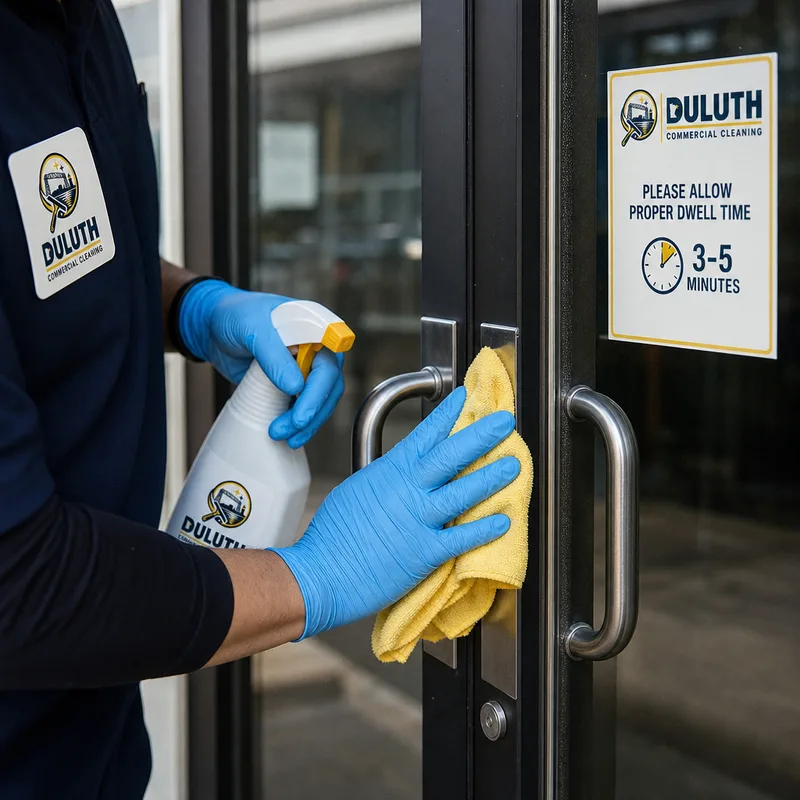
The first ten feet inside the door take every bit of salt, slush and kitchen grease that moves in either direction. Mats are lifted and the floor underneath is cleaned, thresholds and door hardware are wiped, and door glass gets a spot check, with full storefront glass quoted as its own service.

Waste and recycling staging

Bins are emptied, liners replaced, and the staging area itself washed down, because that room holds the smell a dining room eventually inherits. Cardboard is broken down to whatever your hauler requires, and the corral pad gets attention before summer heat makes the problem obvious.

Check Availability
Rooms that book us

Duluth restaurant rooms that need a crew inside a tight window

What a restaurant needs from a cleaner depends less on the menu than on the hours. Four patterns cover most of the rooms we work in, and each one hands us a different gap to finish inside.

  • Full service dining: A room with booths, linens and a bar hands over late and reopens for lunch, so the entire scope has to land inside seven or eight hours. Bar floors and the underside of the rail usually need more attention than the dining side does.
  • Quick service counters: Counter service moves more people across less floor, so entry mats, drink stations and restrooms carry the load while the seating area stays comparatively light. The gap between close and open tends to be shorter, which changes the crew size.
  • Breweries and taprooms: Taproom floors take spilled beer that turns tacky by morning, and the tasting area sees standing crowds rather than seated diners. Rail tops, stool bases and the floor in front of the bar need a tighter interval than the tables ever will.
  • Seasonal patio rooms: A summer patio doubles both the seating and the tracked-in grit for four months, then closes. Most operators here add patio furniture and deck work from June through September and drop back to the indoor scope once the furniture is stored.

When you compare quotes, check the handback time in writing and ask what happens on a night service runs long. A bid built around a midnight lockup is worth very little when your last table leaves at one. Confirm the kitchen exclusion in writing too, so nobody finds that gap during a busy week.

Check Availability
Gloved hand disinfecting door handles and push plates at a commercial entryway
Fitting the gap

How restaurant cleaning runs overnight

Check Availability
01

Your hours set the window

Before anything is priced we take your real closing and opening times, all seven days of them, including the night that always runs late. The working window goes in writing along with the handback time, because that one number is the entire constraint on a room like yours.

02

Scope split at the kitchen door

Every area is marked in or out, and the line, prep stations, hoods and grease systems sit firmly on the out side. Where the boundary is physically vague, such as a service corridor or the dish area, it gets marked during the walk rather than left for a crew to interpret at two in the morning.

03

Crew sized to finish

Crew size follows the window rather than the square footage, so a room that gives us six hours gets more people than an identical room that gives us ten. That is the difference between a floor that dries before opening and a manager stepping around wet tile at nine.

04

Handback and morning check

Chairs go down, floors are dry, lights are set the way your opening crew expects them, and anything found broken or leaking reaches you the same night. The first two weeks include a morning check-in, while the window and the scope are still easy to adjust without renegotiating anything.

Costing restaurant service

How Much Does Restaurant Cleaning Cost in Duluth, MN?

Restaurant cleaning in Duluth typically ranges from $0.12 to $0.35 per square foot per month for nightly front of house service, which puts many rooms between $900 and $3,200 a month. Booked per visit instead, the work more often lands between $150 and $500, driven by how many nights you need and how tight the window is.

Handback time moves the price more than most operators expect, because a six-hour window needs a larger crew than a ten-hour one across identical square footage. Restroom count, bar footage, patio season and whether periodic booth and baseboard detail is folded in all matter as well. A written scope naming what stays with your kitchen staff comes before any number.

Check Availability
Restaurant owner questions

Questions Duluth restaurant owners ask about overnight cleaning crews

Can you clean our kitchen line and hood system?

No. The kitchen line, prep areas, hoods and grease systems sit outside what we do, and they stay with your kitchen staff and a hood cleaning contractor. Our scope is front of house: dining room, restrooms, entrance and waste staging. Keeping that split in writing avoids a gap nobody notices until an inspection week.

What time will your crew be out of the building?

Handback time is agreed before the first visit and written into the scope, usually an hour ahead of your opening crew. When service runs long on a given night, a call to the office moves the crew start, which is easier to arrange than it sounds because dispatch is here in Duluth rather than in another state.

Do you clean seven nights a week or fewer?

Both are common. Rooms doing volume every night generally need seven, while a place closed Sundays and Mondays often runs five with a heavier pass on the first night back. The cadence is set against your covers rather than sold as a package, and it can shift with the season.

Will you handle our patio furniture during the summer season?

Patio work is usually added as a seasonal line from roughly June through September, covering tables, chairs, rail tops and the deck surface itself. It comes off the scope once the furniture is stored, so you are not carrying a patio charge through February when nobody is sitting outside.

Can you get kitchen grease out of the dining room floor?

Grease that walks out of the kitchen on shoes builds a film across the dining floor that routine mopping eventually stops touching. Regular degreasing of the traffic path handles most of it. A room that has gone a long time without one usually needs a periodic deep clean before the nightly routine can hold.

Does your cleaning help us pass a health inspection?

We make no inspection or food-safety claims, and no front of house service honestly can, because the items inspectors weigh most heavily sit inside the kitchen. What this service does is hold the dining room, restrooms and waste areas at a consistent condition against a written scope you can read and check.

Book a night crew

Get a front of house scope and a handback time in writing

Tell us your closing and opening times for each day of the week, your seating count, how many restrooms you run, and whether a patio is in play. We will walk the room after close, write the scope with the kitchen boundary spelled out, and size the crew to finish inside your window.

Request a quote

Tell us about your facility

Send the details and we will arrange a walkthrough, then put a written scope in front of you before any work is scheduled.