Branch access before cleaning

Bank Cleaning Duluth

In a branch, the access protocol gets written before the cleaning plan does: who escorts, which alarm code, what the cameras cover, and the rooms a crew never enters.

✓Written access protocol ✓Escort and alarm rules ✓Named exclusion list
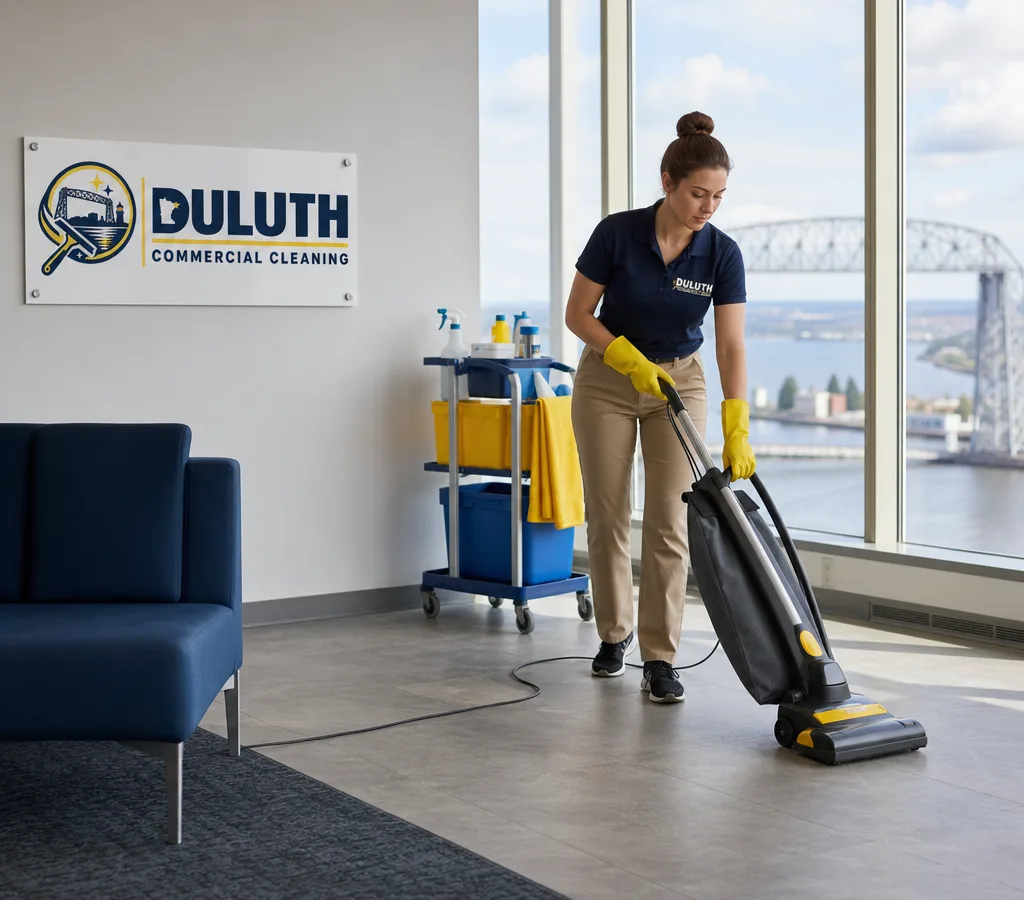
Commercial cleaner maintaining a professional office common area in Duluth
Protocol on the first page

Bank cleaning Duluth branches can document before a crew arrives

Every other building lets you scope the cleaning first and sort access out afterward. A branch reverses that. Until your operations officer has settled who opens the door, who stays in the building, which alarm code the crew uses and which rooms are off limits entirely, there is no point discussing how often the lobby floor gets mopped.

Cleaning covers the public and staff side: the lobby, the teller line's customer-facing surfaces, platform desks, private offices, conference rooms, break areas, staff restrooms and the ATM vestibule. The vault and safe deposit area, cash handling spaces, teller drawers, secure records storage and server or communications rooms are excluded by name, with no exceptions written in.

Dispatch from 26 E Superior St, Unit 4 is a practical advantage on a branch account, because escort arrangements only work if someone can actually be reached when a schedule slips. Most branches here run evening service several nights a week, with the ATM vestibule on a tighter interval through the winter.

Check Availability
Public and staff side

What a branch cleaning scope covers on each visit

Lobby and customer waiting area

Lobby floors, seating, brochure racks, writing counters, pens and the deposit slip stand, plus interior door hardware and glass spot checks, are handled every visit. The lobby is the room a member forms an opinion in while they wait, and it takes tracked-in salt through a long Duluth winter.

Teller line and platform surfaces

The customer-facing side of the teller line is cleaned: counter tops, transaction surfaces, the base of each station and the floor in front of the queue. Drawers, cash handling equipment and anything inside a teller station are never opened, touched or moved by a crew.

Offices and conference rooms

Private offices, loan and platform desks, conference rooms and interview rooms are cleaned on an agreed routine. Paperwork, files, screens and anything left on a desk stay exactly where they are, which in a financial setting is a security matter rather than simply a courtesy.

ATM vestibule and entry zone

The vestibule takes weather, litter and receipts continuously, and it is often the only part of the branch a customer sees after hours. Floors, glass interiors, the trash receptacle and the area immediately around the machine housing are cleaned, with the machine itself left alone.

Staff areas and restrooms

Break rooms, kitchenettes, staff restrooms and back corridors outside the secure zone run on the same routine as the public side. Restroom fixtures, partitions, dispensers and floors are handled every visit, with levels logged so a branch is never short during business hours.

Check Availability
Branch types and protocols

Duluth financial locations where the access rules differ

Access protocol is not one template. What a crew is permitted to do depends on the building type and on how your institution handles after-hours presence, and that shapes the schedule more than the square footage does.

  • Full service branches: A branch with a vault, teller line and platform offices carries the longest exclusion list and usually the strictest after-hours rules. Many require an escort throughout, which means the cleaning window is bounded by how long your staff member is willing to stay.
  • Credit union offices: Member-facing space tends to be larger and more lounge-like, with community rooms that get used in the evenings. Those rooms need their own frequency and their own access note, since an event running late changes the crew's start time for that night.
  • Lending and mortgage offices: Without a vault or cash handling, the exclusion list shortens to secure records storage and server rooms, and access gets simpler. Document confidentiality still governs every desk surface, so a clear-desk boundary matters as much here as a locked door does elsewhere.
  • Standalone ATM vestibules: A vestibule with no branch attached is short, frequent work: floor, interior glass, trash and weather debris. Through winter these often need more than one visit a week, because a single thaw fills the entry with meltwater and grit.

Ask your bidder how they handle a night when the escort cannot make it, because that night will happen. A vendor who says the crew will let themselves in has not read your protocol. The correct answer is that the visit moves and your operations contact is told, which needs agreeing before it comes up rather than during it.

Check Availability
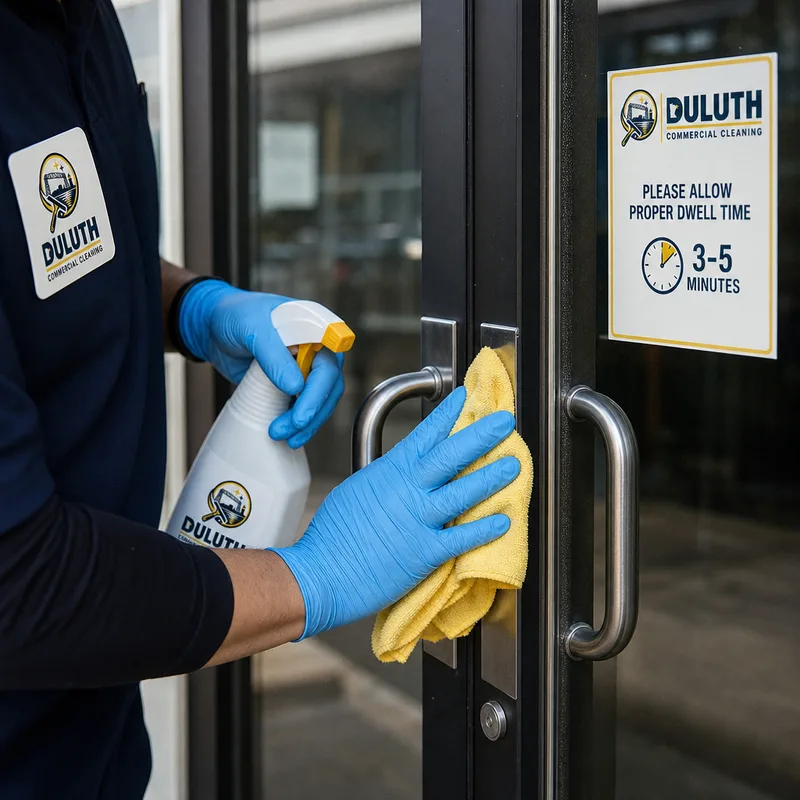
Gloved hand disinfecting door handles and push plates at a commercial entryway
Protocol then plan

How branch cleaning gets authorized and run

Check Availability
01

Access review with operations

The first meeting is with your operations or security officer, not about cleaning at all. Escort requirements, alarm codes and who holds them, key control, sign-in, camera coverage of work areas and any background expectations your institution applies to vendors are all settled and documented first.

02

Exclusion list by name

The vault, safe deposit area, cash handling spaces, teller drawers, secure records storage and server or communications rooms are listed individually as excluded. Crews do not enter or clean those rooms under any circumstance, including a night one is standing open, and no exception is written into the scope.

03

Fixed crew and briefed cover

A named crew is assigned and stays with the branch, since access protocols rely on the same people knowing them. Cover for absence comes only from crew members already cleared under your protocol and briefed on the exclusion list, and you are told in advance when a cover night is coming.

04

Scheduled visits and recorded changes

Visits run on a fixed schedule so your escort can plan around it, and any change to time, crew or scope is recorded and sent to your operations contact rather than arranged informally on site. That record is what makes the protocol auditable months later.

Costing branch service

How Much Does Bank Cleaning Cost in Duluth, MN?

Branch cleaning in Duluth typically ranges from $0.15 to $0.40 per square foot per month, putting most branches between $350 and $1,800 a month at several visits a week. Booked per visit, a standard branch more often lands between $120 and $400, and a standalone ATM vestibule considerably less than that.

Escort requirements are the variable people forget. A branch requiring a staff member present throughout costs more than one with an approved alarm and key arrangement, because the crew size has to fit your escort's available hours. Restroom count, lobby size, vestibule frequency and how many nights a week you need service all matter, and the access protocol is documented before any figure is issued.

Check Availability
Branch operations questions

What Duluth branch managers ask about cleaning a financial institution

Will your crew ever need access to the vault area?

No. The vault, safe deposit area, cash handling spaces and teller drawers are listed by name as excluded and crews do not enter them, including on a night one is left open. Those areas stay entirely with your staff, and the exclusion list is part of the signed scope rather than an informal understanding.

Do you require one of our staff to stay during cleaning?

That is your institution's call and it goes in the protocol either way. Some branches require an escort throughout, others authorize an alarm code and key arrangement for a named crew. Escorted service costs more because the window is bounded by your staff member's hours, so it is worth deciding deliberately.

How do you handle our alarm system after hours?

Only through the arrangement your operations officer documents: who is authorized, which code, the arming and disarming sequence and who gets called if anything reads wrong. Codes are held by named crew members rather than shared around, and a change is recorded the day it happens.

Are your crews aware they are on camera throughout?

Yes, and crews are briefed that branch work areas are covered by your recording systems. In practice this supports the protocol: the footage shows which rooms were entered and when, which is exactly the record you want if a question ever comes up about a specific night.

Can the ATM vestibule be cleaned more often than the branch?

Yes, and through a Duluth winter it usually should be. The vestibule takes meltwater, salt and litter continuously and it is the one part of the branch open when nothing else is. Many locations run the vestibule two or three times a week against a lighter interior schedule.

What happens if our escort cannot be there on a scheduled night?

The visit moves and your operations contact is notified, which is the only correct answer under an escorted protocol. Crews do not find a workaround or enter unescorted, and the missed areas are picked up on the rescheduled visit rather than skipped quietly until the next one comes around.

Document the protocol

Start your branch cleaning with an access protocol on paper

Put us in front of your operations officer with the branch layout, your escort and alarm requirements, and the rooms that are off limits. We will document the protocol and the named exclusion list first, then scope and price only the areas that sit outside it.

Request a quote

Tell us about your facility

Send the details and we will arrange a walkthrough, then put a written scope in front of you before any work is scheduled.