Residue and film removal

Salon Cleaning Duluth

A salon does not get dusty, it gets coated. Hairspray and product overspray build a film on mirrors, stations and light fixtures that a dry cloth just moves around.

✓Product film on mirrors ✓Hair and station detail ✓Treatment room turnover
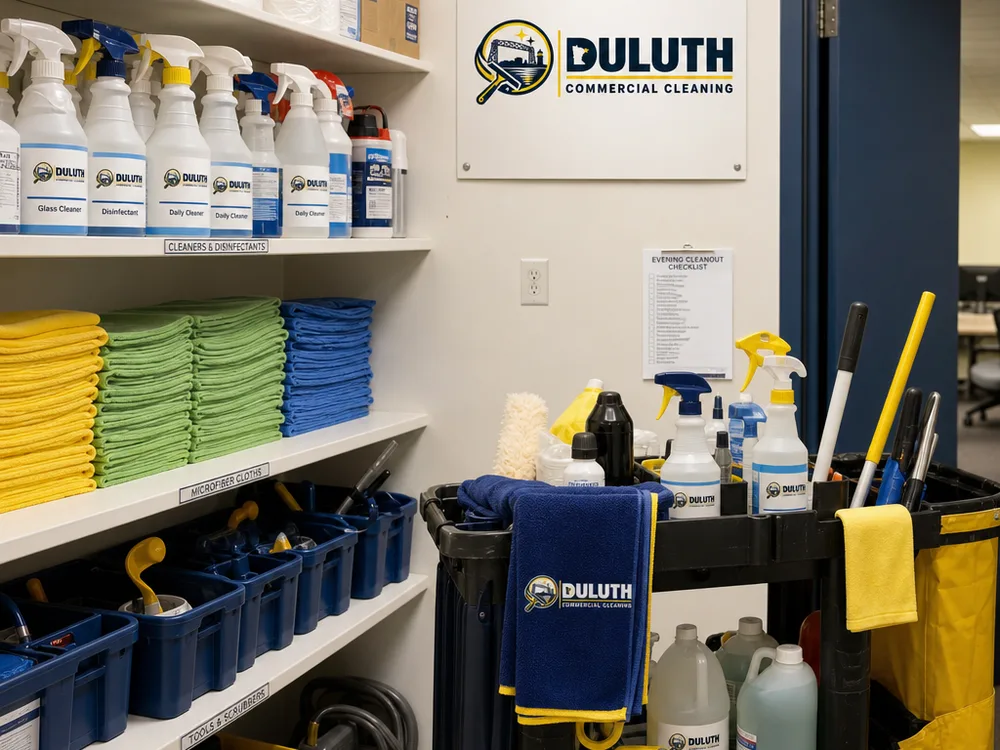
Organized janitorial closet with labeled bottles, color-coded microfiber cloths, and a staged cleaning cart
Why the mirror stays hazy

Salon cleaning Duluth stylists need for product residue

Ask any stylist what bothers them and it is the mirrors. They get wiped constantly and still look veiled by mid-afternoon, and the usual response is to clean them more often. Frequency is rarely the issue. Aerosol product lands as a sticky film, and a dry or already loaded cloth smears that film into an even haze rather than lifting it off the glass.

Getting it off takes the right product and a clean cloth, changed far more often than in a normal commercial setting, plus attention to the station surfaces, chair bases, light fixtures and the wall behind each mirror where overspray collects. Hair itself needs its own routine, because it wraps around chair posts, travels into corners and clogs drains in the shampoo area.

Local dispatch from 26 E Superior St, Unit 4 fits the way salons book: a single day closed most weeks, evenings that run late when a client list fills, and a different rhythm entirely between a busy Saturday and a quiet Tuesday. Most salons here run three to five evenings a week with a heavier pass on their closed day.
Check Availability
Stations and surfaces

What a salon or spa scope covers through the space

Mirrors and station glass

Mirrors are cleaned with a product that cuts aerosol film and cloths that get changed frequently, because a loaded cloth is what produces the haze in the first place. Frames, the wall behind each mirror and the light fixtures around it collect the same overspray and are worked at the same time.

Styling stations and chair detail

Station counters, drawer fronts, chair arms, footrests, hydraulic posts and the base plate each need hand attention, since hair wraps around anything cylindrical and product runs down every vertical surface. The floor around each chair is cleaned in a tighter radius than the rest of the room.

Hair management and drains

Hair collects in corners, under station cabinets, along baseboards and in the shampoo bowls, and it moves through a room in ways ordinary soil does not. Sweeping and vacuuming target those paths specifically, and shampoo bowl and drain surrounds are cleaned to keep buildup from starting.

Treatment rooms between clients

Treatment and massage rooms are reset on a routine you set: surfaces wiped, linens cleared to laundry, floors cleaned and touchpoints handled, with a heavier pass at the end of the day. Anything your licensed staff are responsible for under state board rules stays with them.

Laundry, back bar and restrooms

The laundry area, back bar, color mixing station and the sinks in them carry the heaviest residue in the building and generate lint that spreads everywhere. Counters, sink basins, floors and the machine exteriors are handled every visit, along with the restrooms on the same routine.

Check Availability
Studios we clean

Duluth salon and spa spaces with different residue profiles

What builds up on your surfaces depends entirely on what gets used in the room. These four types come with distinctly different residue, and a scope written for one of them underperforms in another.

  • Hair salons: Aerosol product and hair are the whole problem: film on every reflective and horizontal surface, and hair reaching places you would not expect. Mirrors, stations and the floor around each chair carry the frequency, and the back bar needs more attention than its size suggests.
  • Nail studios: Acrylic and polish dust settles as a fine grit on tables, lamps, chair arms and the floor under each station, and it is abrasive rather than greasy. The internal sanitizing cycle of pedicure basins stays with your licensed staff under state board rules.
  • Day spas: Oils and lotions produce a slow film on treatment tables, door hardware, floors and the inside of every cabinet door. Rooms turn over between clients and need a reset routine rather than a single end-of-day pass, plus wet area attention around showers and steam rooms.
  • Barbershops and grooming: Heavy hair volume, shorter appointments and less aerosol than a salon, which shifts the work toward sweeping frequency, chair detail and the floor. Station surfaces still take product, but the mirror film problem is usually milder than in a full service salon.

If your mirrors are hazy and you have already raised the frequency, the cloth and the product are the problem rather than the schedule. Ask any bidder what they would use on mirror overspray and how often the cloth gets changed. A vendor who has no answer to that has never cleaned a salon properly.

Check Availability
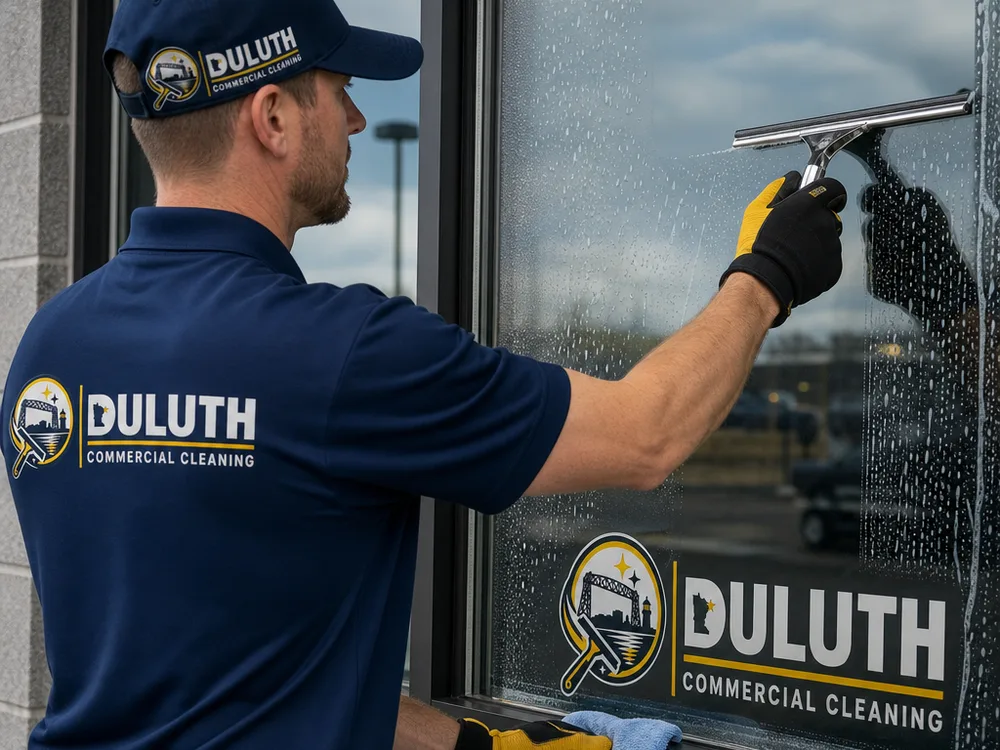
Close-up of squeegee technique and towel detailing on commercial glass
Matching method to residue

How salon and spa cleaning is scoped

Check Availability
01

Identify what is actually building up

The walk starts with the residue rather than the room: aerosol film, polish dust, oils, hair volume, or some combination. What is on your surfaces determines the products and the cloth routine, and it is the reason two salons of identical size can need very different scopes.

02

Set the boundary with licensed staff

Tool and implement sanitizing stays with your licensed staff under state board rules, and so does the internal sanitizing cycle of pedicure basins. That line is written into the scope, so nobody assumes a cleaning crew has covered a regulated step that belongs to your team.

03

Schedule around the appointment book

Cleaning fits how you trade: evenings after the last client on busy days, a heavier pass on your closed day, and treatment room resets on whatever interval your bookings need. Late-running nights are normal in this trade, so the crew start is arranged to flex rather than sitting fixed.

04

Adjust after the first weeks

Early visits show where residue concentrates in your particular space, which is rarely where anyone predicted. Products, cloth frequency and the attention given to each zone get tuned in the first month, and the revised routine is written down rather than carried in one crew member's head.

Costing salon service

How Much Does Salon Cleaning Cost in Duluth, MN?

Salon and spa cleaning in Duluth typically ranges from $0.14 to $0.40 per square foot per month, and because these spaces are small, per-visit pricing is more common: usually $90 to $280 a visit depending on station count and how many treatment rooms are in play. Most studios land between $350 and $1,400 a month.

Station and treatment room counts drive the figure more than square footage, since almost all the work is hand detail rather than open floor. Residue type, how many evenings a week you need service, whether the laundry area is included and how late the appointment book runs all move it. Scope is written station by station before a price is issued.

Check Availability
Salon owner questions

What Duluth salon and spa owners ask about cleaning residue

Why do our mirrors look hazy again a few hours after cleaning?

Because aerosol product leaves a sticky film and a dry or already loaded cloth spreads it instead of lifting it. The fix is a product that cuts the film and a cloth changed far more often than a normal commercial routine would bother with. Raising frequency without changing either one just produces the same haze more often.

Do you sanitize our tools, shears and implements?

No. Sanitizing and disinfecting tools and implements stays with your licensed staff under Minnesota state board rules, and the same applies to the internal sanitizing cycle of pedicure basins. We clean the space: surfaces, stations, mirrors, floors, laundry areas and restrooms, with that boundary written into the scope.

How do you handle hair that gets everywhere?

By targeting where it actually travels rather than just sweeping the open floor. Hair wraps around chair posts and hydraulics, collects under station cabinets and along baseboards, and moves toward doorways. Those paths get worked specifically, and shampoo bowl and drain surrounds are cleaned to stop buildup forming.

Can you clean between clients during the day?

Daytime resets suit spas with treatment rooms turning over on a schedule, and some salons add a midday restroom and back bar check. A full pass works better after the last appointment, since stations need to be clear and the floor has to be workable without anyone sitting in a chair.

Will you clean our laundry area and back bar?

Yes, and both are usually where the worst residue in the building sits. Color mixing surfaces, sink basins, counters, machine exteriors and the floor are handled every visit, and the lint that spreads from a laundry area is worth catching at source rather than chasing through the rest of the space.

Do you work around a salon that closes one day a week?

Yes, and the closed day is usually the best slot for the heavier pass, since stations can be moved and floors can be worked properly with nobody in the chairs. The remaining visits then run lighter in the evenings, which is how most studios here end up structuring the week.

Fix the film problem

Get a salon scope built around the residue in your space

Tell us how many stations and treatment rooms you run, what products get used most, which day you close and how late the book usually goes. We will walk the space to see what is actually building up, then write the scope station by station with the licensed-staff boundary stated.

Request a quote

Tell us about your facility

Send the details and we will arrange a walkthrough, then put a written scope in front of you before any work is scheduled.