Odor at its source

Gym Cleaning Duluth

Gym smell does not live in the air, it lives in grout, drains, padding seams and the underside of every bench. Masking it works for an hour. Removing it works until next week.

✓Grout, drains and seams ✓Locker rooms and showers ✓Zone cleaning around 24 hours
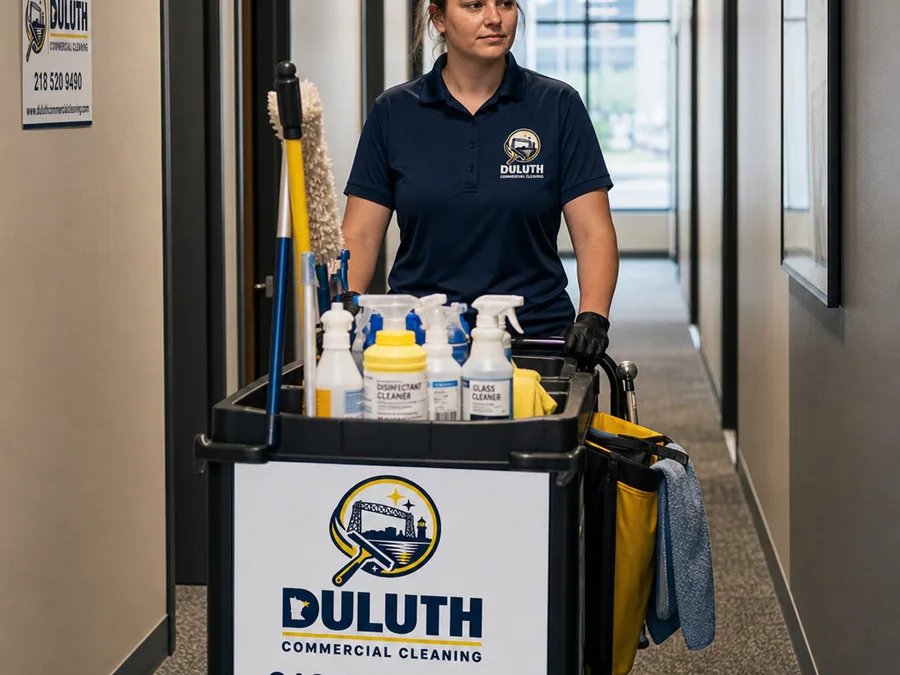
Uniformed janitorial technician moving organized cleaning tools through a commercial hallway
Where the smell lives

Gym cleaning Duluth facilities need to remove odor rather than cover it

A member walks in and knows within seconds. Air freshener buys about an hour, then the smell comes back, because it is not in the air at all. It is in shower grout, floor drains that have gone dry, the seams of vinyl padding, the underside of every bench and the felt pads on the bottom of equipment that never gets moved.

Treating those sources is slower and less visible than spraying a scent, and it is the only thing that works. Grout lines and drains get worked directly, bench undersides and padding seams are cleaned rather than wiped over the top, locker interiors and bases are handled, and mats and turf get a routine that accounts for sweat soaking in rather than sitting on the surface.

Scheduling from our office at 26 E Superior St, Unit 4 suits a facility with no natural closing time, because zone work depends on a crew that can shift with your quiet hours. Most gyms here run nightly on locker rooms and wet areas, with the training floor zoned across the week and a periodic reset on top.

Check Availability
Sources, not surfaces

What a fitness facility scope covers through the building

Locker rooms and wet areas

Shower floors and walls, grout lines, drain surrounds, benches, locker interiors and bases, and the floor beneath them carry most of the odor load in the building. Grout takes a product with real dwell time and agitation, because wiping a tiled wall leaves the porous lines untouched.

Floor drains and standing water

A dry drain trap lets sewer gas straight into a locker room, and it is one of the most common causes of a smell nobody can locate. Drains are checked and flushed on a routine, and the surrounding floor and grate are cleaned, since buildup around a grate produces its own odor.

Bench undersides and padding seams

Sweat runs off a bench and collects underneath it, then sits in the seam where vinyl meets frame and in the stitching of every pad. Those surfaces are cleaned from below and along the seams, which is the difference between a bench that smells clean and one that only looks it.

Mats, turf and functional areas

Rubber flooring, stall mats, turf lanes and stretching areas absorb sweat rather than shedding it, so they need a wet routine at a stated interval rather than a daily dry pass. Seams and the edges where a mat meets the wall hold the most and get specific attention.

Studios, restrooms and common areas

Group fitness studios, mirrors, restrooms, reception, the water station and corridors run on their own frequency. Studio floors take a heavy sweat load in a short window, and mirrors in a humid room need a method that does not simply leave a film behind.

Check Availability
Facility types and hours

Duluth fitness facilities where scheduling is the hard part

The cleaning problem in a gym is rarely what to clean. It is finding the hours to do it in, and every facility type hands us a different version of that constraint.

  • 24-hour access gyms: There is no closed period at all, so everything is zone work: one area at a time, barriered, cleaned and handed back while members use the rest. Wet areas are the hardest to zone, which usually pushes them into the three to five in the morning window.
  • Boutique studios: Class-based studios pack a heavy sweat load into a short window, then sit empty between sessions. The gaps between classes are genuinely usable, so a studio often gets several short resets a day instead of one long overnight visit.
  • Locker room heavy clubs: A full club with showers, saunas and a pool area carries a wet-area load that dominates the whole scope. Grout, drains and ventilation all matter more here than the training floor does, and this is where a facility most often needs a periodic reset alongside the routine.
  • Employer and hotel fitness rooms: A small unstaffed room with a few machines and a restroom nearby, used at unpredictable hours. Frequency is lower, but odor still builds because nobody owns the space day to day, and the equipment-wipe question needs a clear answer with no staff on site.

Settle the equipment-wipe question in writing before you sign, because members will assume the machines are covered whoever actually does it. Then ask your bidder what they would do about a persistent locker room smell. If the answer involves a fragrance rather than grout and drains, keep looking.

Check Availability
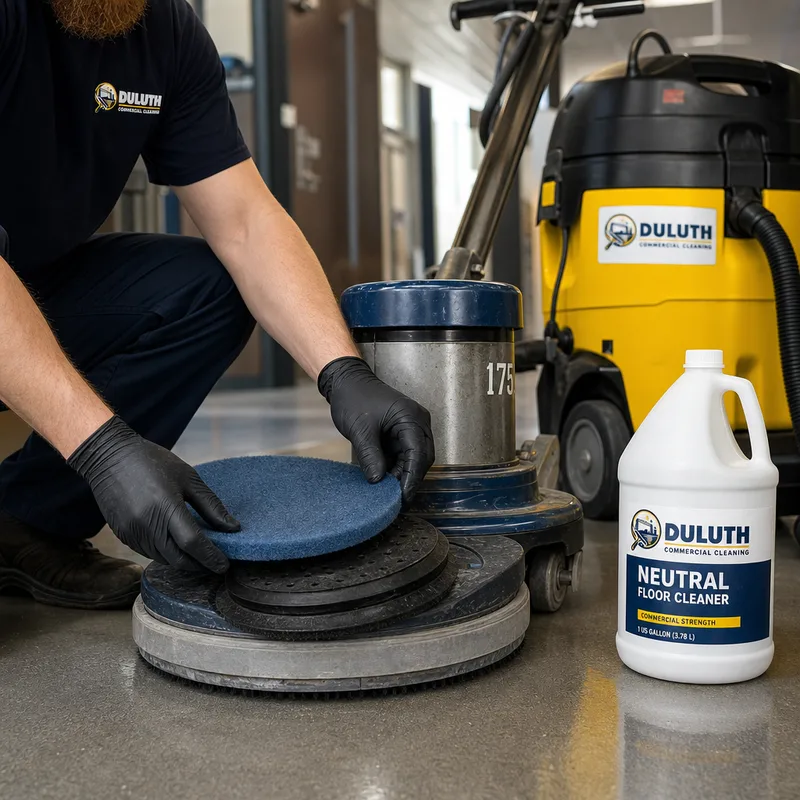
Floor technician changing pads on a low-speed floor machine beside labeled cleaning equipment
Finding the hours

How gym cleaning is scheduled and scoped

Check Availability
01

Traffic pattern before task list

We start with your check-in pattern across the week to find the genuinely quiet hours, because a 24-hour facility has no closed period and a class schedule dictates its own gaps. Those windows determine how the building gets divided into zones and what can be done in each one.

02

Track down the odor sources

Before pricing a routine we look for what is actually producing the smell: dry traps, grout that has never been properly worked, padding seams, bench undersides, mat seams, equipment feet. Some of that needs a one-time reset first, because no nightly routine can catch up on years of buildup.

03

Equipment wipe boundary agreed

You decide who wipes machines between members and it goes in writing, since members assume the machines are covered either way. Most staffed facilities keep that with their floor team and have us handle frames, bases, the floor underneath and the wipe stations, while unstaffed rooms usually need it in our scope.

04

Zone rotation and reset interval

The routine assigns areas to nights with wet areas nightly and the training floor on rotation, plus a periodic deep reset for grout, drains and padding at a stated interval. Barriers and signage are agreed in advance so a zone can be closed off without anyone's workout being ruined.

Costing gym service

How Much Does Gym Cleaning Cost in Duluth, MN?

Gym cleaning in Duluth typically ranges from $0.14 to $0.38 per square foot per month for nightly service, which puts many facilities between $700 and $3,500 a month. A boutique studio booking short daily resets more often sits between $400 and $1,200, since the footprint is small even though the sweat load is not.

Locker room and shower count is the biggest driver, because wet areas hold the labor and the odor work. Membership volume, whether the facility runs 24 hours, how the equipment-wipe boundary is split, mat and turf area and the periodic reset interval all move the figure. A facility with an existing odor problem usually needs a one-time reset priced separately before a routine can hold.

Check Availability
Fitness operator questions

What Duluth gym operators ask about cleaning and odor control

Who wipes down the machines between members, you or our staff?

Whichever you decide, and it belongs in writing because members assume the machines are covered regardless. Staffed facilities usually keep member-to-member wiping with their floor team while we handle frames, bases, the floor underneath and the wipe stations. Unstaffed rooms generally need that work inside our scope instead.

Why does our locker room still smell after cleaning?

Almost always grout, a dry drain trap, or both. Wiping tiled walls and floors leaves the porous grout lines untouched, and a trap that has dried out vents sewer gas directly into the room. Both need direct treatment, and a facility that has gone years without it usually needs a reset before a routine can hold.

Can you clean a 24-hour gym that never actually closes?

Yes, through zone work: one area barriered, cleaned and handed back while members use the rest of the building. Wet areas are the hardest to zone, so those usually land in your quietest window, often between three and five in the morning based on your own check-in data.

How often do rubber floors and turf need wet cleaning?

Weekly to monthly depending on traffic, on top of daily dry passes. Sweat soaks into rubber and turf instead of sitting on top, so a dry pass alone builds odor over time. Seams and the edges where a mat meets the wall hold the most and are where the smell usually starts.

Do you clean the inside of the lockers themselves?

Locker interiors and bases are included at an interval you set, usually weekly or monthly, and it makes a bigger difference than most operators expect. Anything left behind by a member is handled under your own lost property policy rather than by the cleaning crew making a judgment call.

Will you use something to make the gym smell better?

Only after the sources are dealt with, and honestly it is rarely needed by then. Fragrance over an untreated locker room buys about an hour and hides the problem from you while members still notice it. Grout, drains, seams and bench undersides are where the work has to go first.

Treat the odor sources

Get a gym scope that goes after odor instead of covering it

Tell us your square footage, how many locker rooms and showers you run, your opening hours and who currently wipes the machines. We will walk the building to find the actual odor sources, propose zones against your quiet hours, and price any one-time reset separately from the routine.

Request a quote

Tell us about your facility

Send the details and we will arrange a walkthrough, then put a written scope in front of you before any work is scheduled.